
Incubator Accessories


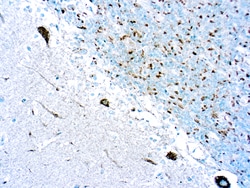
Diagnostic Biosystems PAN-TRK Pan-TRK
Neurotrophic tyrosine kinase receptor (NTRK) is a family of 3 proto-oncogenes including NTRK1, NTRK2, and NTRK3 which encode Trk A, Trk B, and Trk C proteins, respectively. The latter are involved in biological processes such as neuronal survival, differentiation, and plasticity under physiological circumstances. In various cancers, oncogenic fusionsinvolving the kinase domain of NTRK1, 2, or 3 are present. Pan-Trk IHC is a time- and tissue-efficient screen for NTRK fusions, particularly in driver-negative advanced malignancies and potential cases of secretory carcinoma and congenital fibrosarcoma. Pan-Trk IHC can help determine whether translation occurs for novel NTRK rearrangements.

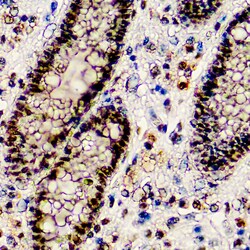
Diagnostic Biosystems BAP1 BAP1 (BAP1/2667)
BAP1 (BRCA1-Associated Protein 1) was initially identified as a protein that binds to BRCA1. BAP1 is a tumor suppressor that is believed to mediate its effects through chromatin modulation, transcriptional regulation, and possibly via the ubiquitin-proteasome system and the DNA damage response pathway. Germline mutations of BAP1 confer increased susceptibility for the development of several tumors, including uveal melanoma, epithelioid atypical Spitz tumors, cutaneous melanoma, and mesothelioma. Somatic BAP1 mutations are seen in cutaneous melanocytic tumors (epithelioid atypical Spitztumors and melanoma), uveal melanoma, mesothelioma, clear cell renal cell carcinoma, and other tumors. BAP1 immunohistochemistry is particularly useful in differentiating malignant mesothelioma (nuclear negative) vs. reactive mesothelial proliferation (nuclear positive).
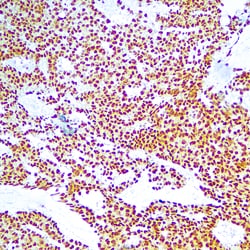
Diagnostic Biosystems OCT 3/4 OCT-3/4 (OCT4/6847R)
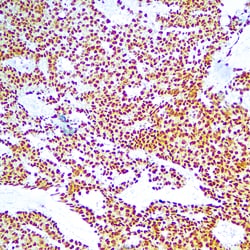
OCT-3/4 (also known as POU5F1) is a transcription factor that has been recognized as fundamental in the maintenance of pluripotency in embryonic stem cells and primordial germ cells. It has been proposed as a useful marker for germ cell tumors (GCT) that exhibit features of pluripotentiality (seminoma/dysgerminoma, germinoma and embryonal carcinoma. OCT-3/4 immunostaining has been shown to be sensitive and specific for GCT, whether in primary gonadal or extragonadal sites or in metastatic lesions.
Diagnostic Biosystems OCT 3/4 OCT-3/4 (OCT4/6847R)
OCT-3/4 (also known as POU5F1) is a transcription factor that has been recognized as fundamental in the maintenance of pluripotency in embryonic stem cells and primordial germ cells. It has been proposed as a useful marker for germ cell tumors (GCT) that exhibit features of pluripotentiality (seminoma/dysgerminoma, germinoma and embryonal carcinoma. OCT-3/4 immunostaining has been shown to be sensitive and specific for GCT, whether in primary gonadal or extragonadal sites or in metastatic lesions.
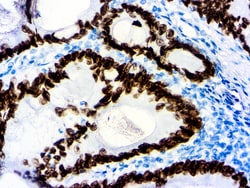
Diagnostic Biosystems SATB2 SATB2 (EP 281)
Special AT-rich sequence-binding protein 2 (SATB2) is a recently described marker that functions as a nuclear matrix-associated transcription factor. It has been reported that SATB2, in combination with CK20, could identify almost all colorectal carcinomas, including poorly differentiated colorectal carcinomas. Upper gastrointestinal (GI) carcinomas and pancreatic ductal carcinomas are usually negative for SATB2, and ovarian carcinomas, lung adenocarcinomas, and adenocarcinomas from other origin are rarely positive for SATB2. Therefore, SATB2 is a good marker for identifying a carcinoma of colorectal origin when working on a tumor of unknown primary. It can help differentiate colorectal metastasis (SATB2+) from primary pulmonary adenocarcinoma of mucinous or enteric type (SATB2- but often CDX2+)\n
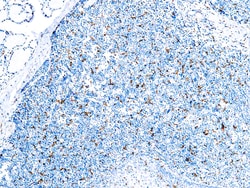
Diagnostic Biosystems CD163 CD163
The CD163 molecule is a type I membrane protein also known as M130 antigen, Ber-Mac3, Ki-M8 or SM4. CD163 protein is restricted in its expression to the monocytic/macrophage lineage. It is reported to be present on all circulating monocytes and most tissue macrophages except those found in the mantle zone and germinal centers of lymphoid follicles, interdigitating reticulum cells and Langerhans cells. In addition, multinucleated cells within inflammatory lesions are reported not to express CD163 protein. The protein is upregulated by glucocorticoids and downregulated by the immunosuppressant cyclosporin A and by phorbol esters.
Diagnostic Biosystems MOUSE ON MOUSE MOM UNOVUE HRP MOUSE ON MOUSE MOM UNOVUE HRP
Mouse on Mouse (MOM) Blocking Reagent is a unique serum-free blocking solution used to reduce nonspecific background staining from mouse antibodies. This blocking reagent has been shown to be more superior than serum-based blocking solutions.\n\nBlock nonspecific background staining observed during immunostaining using mouse antibodies on mouse tissue.

Diagnostic Biosystems DAB AUTO DAB Auto
DAB, a widely used chromogen for immunoperoxidase staining, is well accepted among pathologists because of its increased sensitivity and ability to give cleaner background as compared to amino ethylcarbazole (AEC). Specimens stained in DAB can be dehydrated, cleared, and mounted for permanent record keeping.
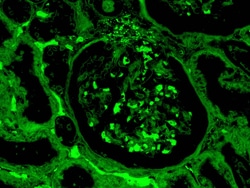
Diagnostic Biosystems C4C-FITC C4c Complement-FITC
This antibody reacts with human C4, C4b, and C4c but does not react with the C4d epitope. Traces of contaminating antibodies have been removed by solid phase absorption with human plasma proteins. This antibody is well suited for tissue section staining but may also be used for other applications.
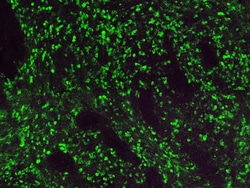
Diagnostic Biosystems KAPPA LIGHT CHAIN-FITC Kappa Light Chain-FITC
Traces of contaminating antibodies have been removed by solid phase absorption. Only the kappa precipitation line appeared in cross immunoelectrophoresis. This antibody is well suited for tissue section staining but may be used for other applications.

Diagnostic Biosystems AMYLOID PRECURSOR PROTEIN APP Amyloid Precursor Protein (APP)
This antibody reacts with a 95-100 kDa protein. This antibody recognizes amyloid precursor proteins APP695, APP751 and APP770. Amyloid precursor protein and APP-like proteins are transmembrane glycoproteins with a similar modular domain structure.

Diagnostic Biosystems CD7 CD7 (CBC.37.80)
CD7 is expressed by most peripheral blood T cells, NK cells, and all thymocytes. It is one of the earliest surface antigens on T and NK-cell lineages. The antibody is a useful aid for classification of T-cell malignancies.

Diagnostic Biosystems ATRX ATRX (D-5)
ATRX is a member of the Snf2 family of helicase/ATPases, which contribute to the remodeling of the nucelosome structure in an ATPdependent manner and facilitate the initiation of transcription and replication. Central nervous system (CNS): loss of ATRX expression in 45% of anaplastic astrocytomas, 27% of anaplastic oligoastrocytomas, 10% of anaplastic oligodendrogliomas. Genetic signatures, including ATRX, may refine classification of gliomas

Diagnostic Biosystems C-MYC C-myc
This antibody recognizes a transcription factor of 64-67kDa, identified as c-myc. Its epitope spans between aa 410-419 (EQKLISEEDL) which is a specific portion of an alpha helical region of human c-myc protein. This antibody shows no cross-reaction with v-myc. c-myc is involved in the control of cell proliferation and differentiation and is amplified and/or over expressed in a variety of tumors. Over-expression of c-myc protein occurs frequently in luminal cells of prostate intraepithelial neoplasia as well as in most primary carcinomas and metastatic disease.